

Welcome
Thank you for joining us for our inaugural performance at The Midwest Clinic. Today’s concert celebrates the members and supporters of the Springboro Wind Symphony. In just five years, this ensemble has flourished, building both success and a vibrant community of musicians rooted in Springboro, Ohio.
-
We extend our heartfelt gratitude to the Midwest Clinic Board of Directors and Staff, who have made this event so special for everyone involved. A special thanks goes to our own Executive Director and Co-Founder, Stephanie Catanzaro, whose leadership and dedication have been instrumental to our success—we truly would not be here without her. We are also deeply honored to have the support and inspiration of guest conductors, Dr. Shelley Jagow, Dr. Alfred Watkins, and Mr. Jason Fettig.
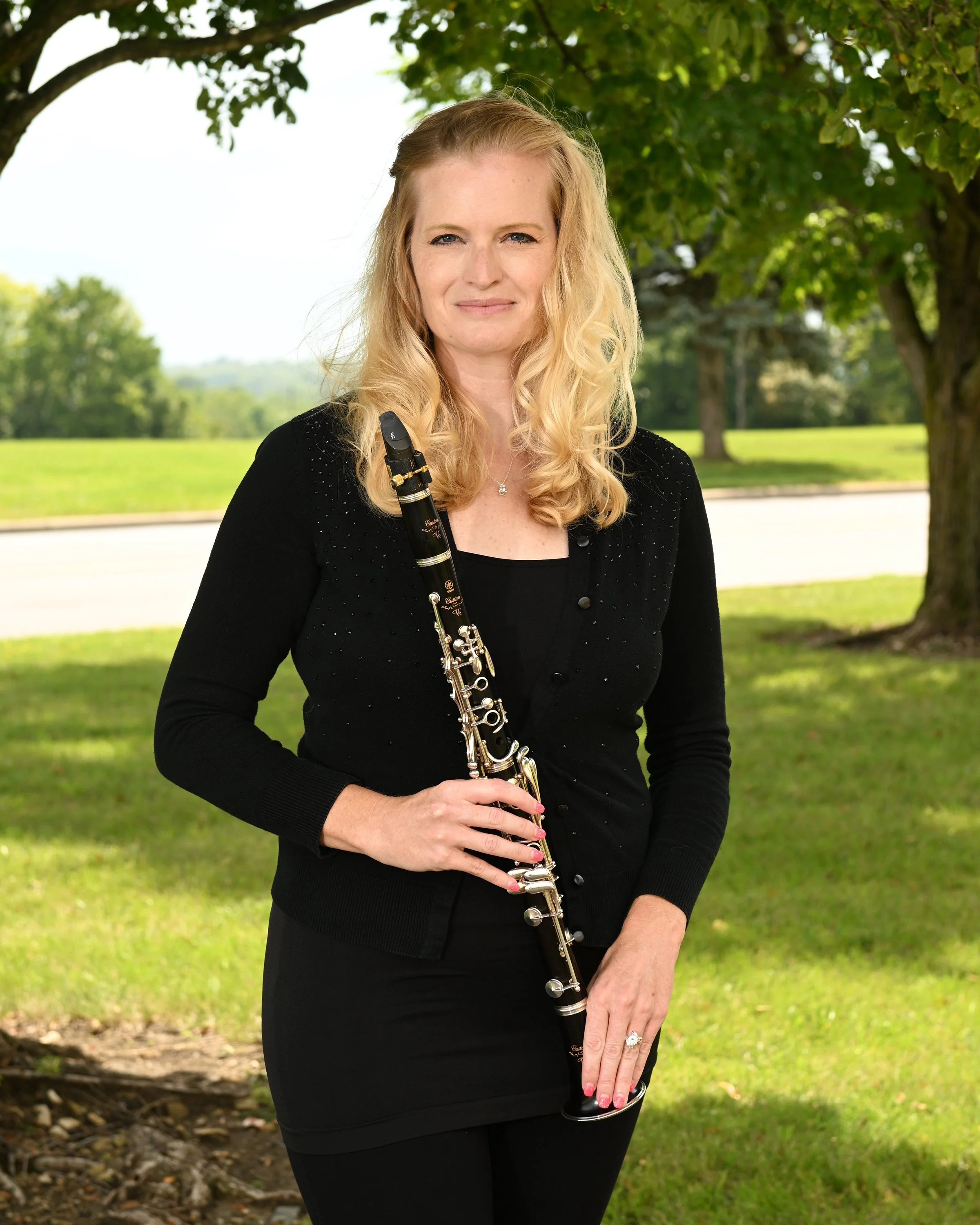
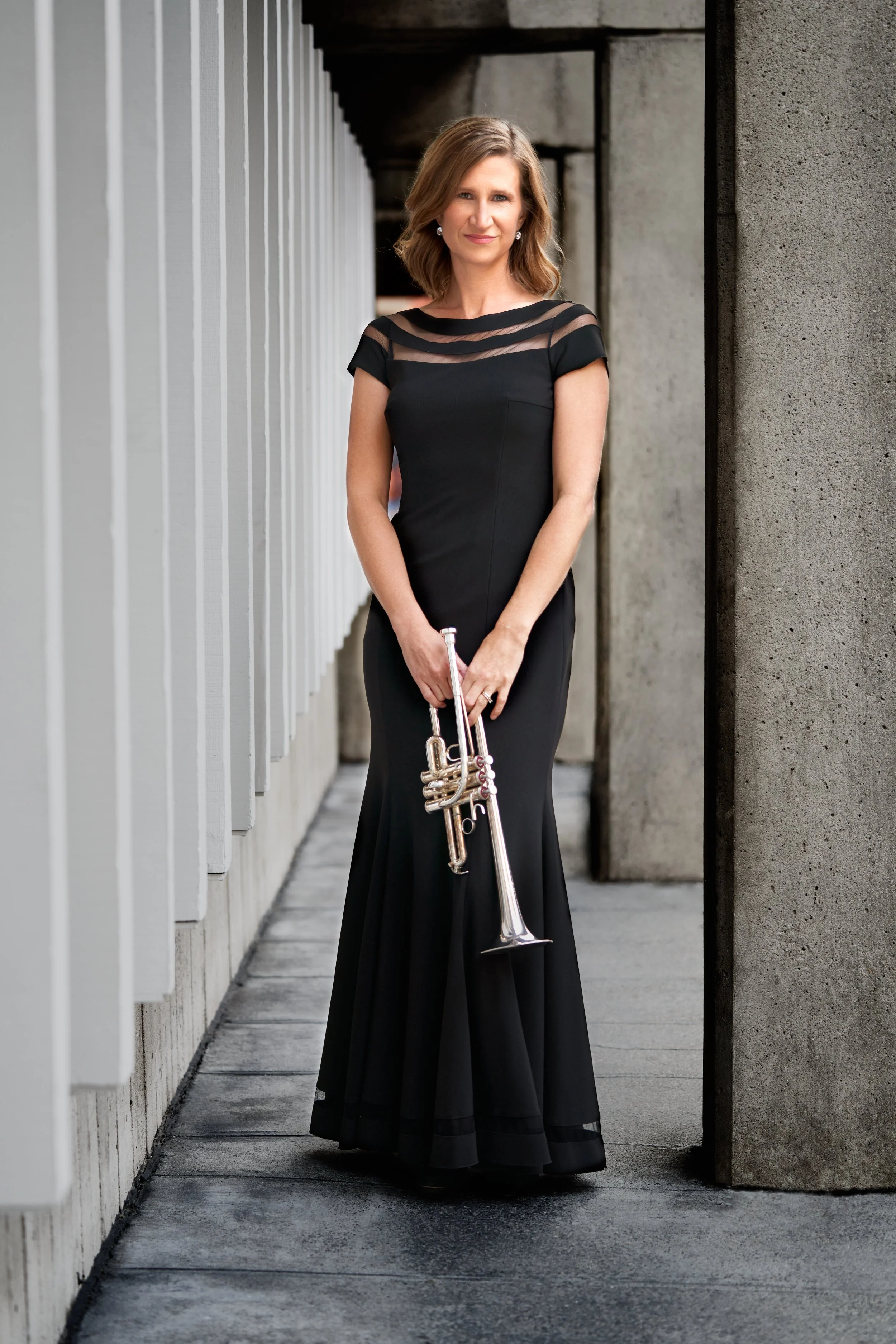
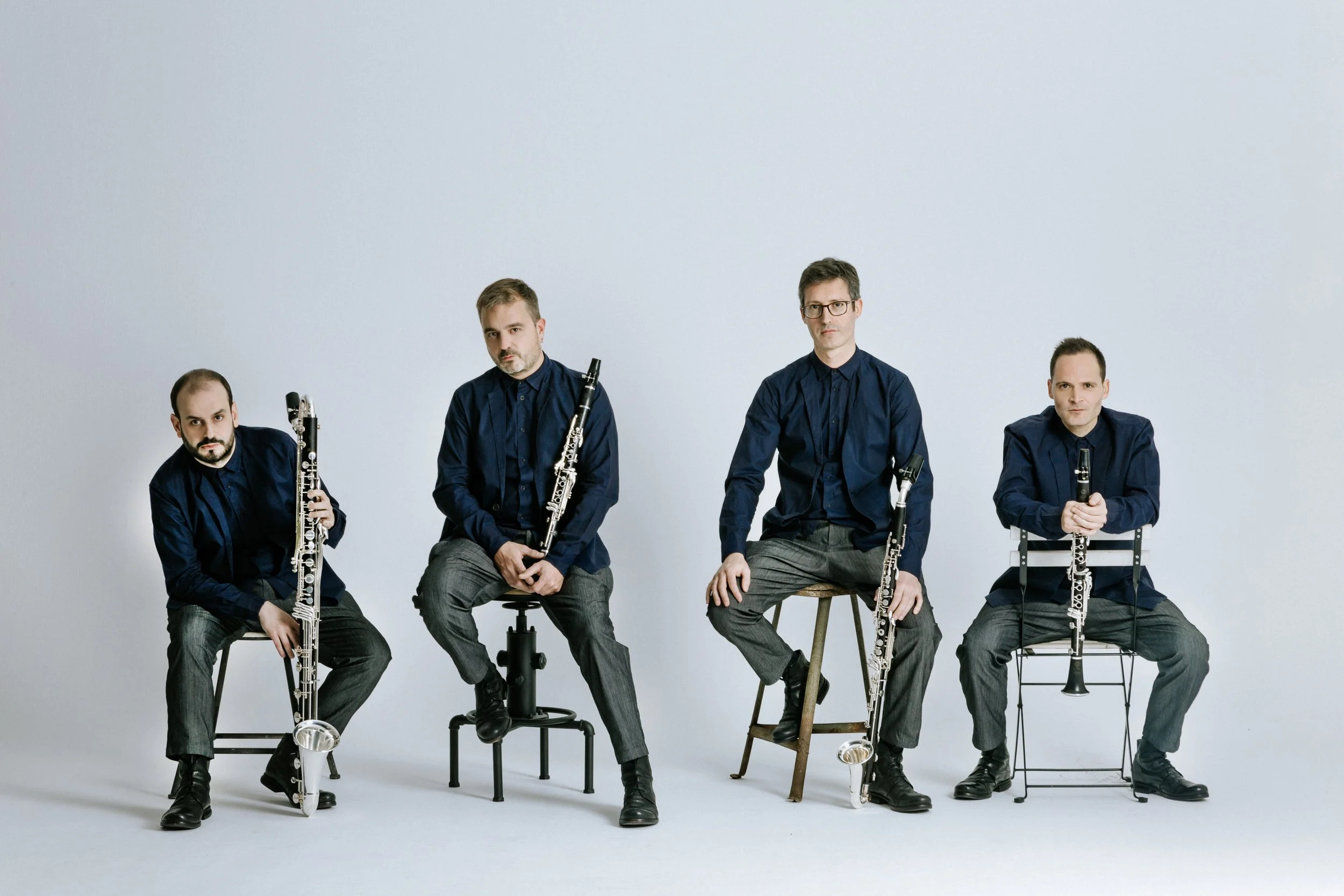
In addition, having the opportunity to share this stage with guest artists Ashley Tighe-Hall and the Barcelona Clarinet Players makes this momentous occasion all the more meaningful. We are grateful to Springboro Community Schools and their band directors Nick Palmer and Connor Reidy, who have been unwavering supporters since our founding. Their commitment and dedication have been vital to our growth.
The musicians and Board members of the Springboro Wind Symphony work tirelessly to create an ensemble that is exceptional in every sense. The leadership of our Board has been outstanding - we are so fortunate to have such servant and insightful leaders working together for our success and the legacy of our organization. Our members are not only talented musicians; they are also inspiring, dedicated, humble, and enthusiastic individuals. Together, we have built a culture that has fostered our success in performing a diverse array of wind repertoire within our region, while also bringing influential figures in music education into our rehearsals and local band rooms to positively impact students and educators alike.
I am profoundly grateful to each member for their contributions to our strong culture of community, connection, and musical excellence. My gratitude also extends to the music educators and mentors in my life, past and present—thank you for investing in me and believing in my journey.
For the 78th Midwest Clinic, we sought to present a diverse showcase of musical styles and composers, while also highlighting the talents and creativity of the great state of Ohio. Today’s concert will feature works by Ohio composers John Mackey and Nicole Piunno, and we are proud to include guest conductor Dr. Shelley Jagow and trumpet soloist Ashley Tighe-Hall, both distinguished music educators from Ohio. We are also thrilled to premiere a newly commissioned work by Timothy Mahr called “Spring Forward.” Partnering with Tim to bring this commission to life has been so much fun - thank you, Tim!
We are proud of our community, our journey, and our members. Thank you for sharing this meaningful moment of our ensemble's history with us, and we hope you enjoy today’s program.
Sincerely,
Josh Baker
Co-Founder, Conductor and Musical Director
Springboro Wind Symphony
Directors, Guest Conductors, & Guest Artists
-
![]()
Josh Baker
MUSIC DIRECTOR
-
![]()
Stephanie Catanzaro
EXECUTIVE DIRECTOR
-
![]()
Dr. Timothy Mahr
COMPOSER
-
![]()
Dr. Alfred L. Watkins
GUEST CONDUCTOR
-
![]()
Colonel Jason Fettig (Ret.)
GUEST CONDUCTOR
-
![]()
Dr. Shelley M. Jagow
GUEST CONDUCTOR
-
![]()
Ashley Hall-Tighe
GUEST ARTIST
-
![]()
Barcelona Clarinet Players
GUEST ARTIST



Program
Springboro Wind Symphony
The 78th Midwest Clinic
December 18, 2024 // 11:30am
McCormick Place West
Chicago, Illinois
Ballroom 375AB
Josh Baker, Music Director
Dr. Timothy Mahr, Composer
Dr. Alfred Watkins, Guest Conductor
Colonel Jason Fettig (Ret.), Guest Conductor
Dr. Shelley Jagow, Guest Conductor
Ashely Hall-Tighe, Guest Artist
Barcelona Clarinet Players, Guest Artist
-
World Premiere, Commissioned by Springboro Wind Symphony
Composer: Timothy Mahr
Year: 2024
Grade: 4
Duration: 4:30
Publisher: Mahr Music Press -
Composer: Malcolm Arnold
Year: 2024
Grade: 4
Duration: 4:30
Publisher: Mahr Music Press -
Alfred Watkins, Conductor
Composer: Viet Cuong
Year: 2023
Grade: 2
Duration: 4:00
Publisher: Blue Dot Composers Collective -
Composer: Julie Giroux
Year: 2024
Grade: 4
Duration: 8:30
Publisher: Giroux Music -
Composer: JaRod Hall
Year: 2023
Grade: 1
Duration: 1:50
Publisher: Randle Standridge Music, LLC -
Jason Fettig, Conductor
Composer: Julius Fucik, arr. John R. Bourgeois
Year: 2019
Grade: 3
Duration: 3:30
Publisher: Wingert-Jones Publications -
Shelley Jagow, Conductor
Ashley Hall-Tighe, TrumpetComposer: Nicole Piunno
Year: 2019
Grade: 5
Duration: 9:55
Publisher: Metaphor Music Works -
Composer: Katahj Copley
Year: 2019
Grade: 3
Duration: 4:00
Publisher: Katahj Copley Music -
Barcelona Clarinet Players, Clarinet Quartet
Composer: Oscar Navarro
Year: 2019
Grade: 6
Duration: 10:00
Publisher: Oscar Navarro Music

Commissioned Work &
World Premiere
Spring Forward
by Timothy Mahr
Receiving a commission from a superior civic ensemble such as the Springboro Wind Symphony to compose a spirited opening work for a premiere performance at The Midwest Clinic is a fantastic opportunity and certainly a high honor. In my initial discussions with conductor Josh Baker, I found out that Springboro, Ohio was founded near natural springs. All sorts of images came to mind tied to the use of the word "spring" that meshed well with the general goals of a concert opener. Various sections of music developed from thinking about these situations and states of energy, and the work has section headings as follows:
The Promise of Spring
Spring to Life
Spring into Action
Spring Water
Spring to Mind
Spring in Your Step
The Promise of Spring
Spring Forward
This is not a programmatic work; rather, it’s a collection of materials that developed from a few basic progressions, rhythmic impulses and melodic ideas, all influenced by the notion of “spring” in its many forms.
Spring Forward was commissioned by the Springboro Wind Symphony for its 2024 performance at The Midwest Clinic.
Program Notes

Four Scottish Dances
by Malcolm Arnold, arr. John Paynter
These dances were composed early in 1957, and are dedicated to the BBC Light Music Festival. They are all based on original melodies but one, the melody of which is composed by Robert Burns.
The first dance is in the style of a slow strathspey - a slow Scottish dance in 4/4 meter - with many dotted notes, frequently in the inverted arrangement of the "Scottish snap." The name was derived from the strath valley of Spey. The second, a lively reel, begins in the key of E-flat and rises a semi-tone each time it is played until the bassoon plays it, at a greatly reduced speed, in the key of G. The final statement of the dance is at the original speed in the home key of E-flat.
The third dance is in the style of a Hebridean song and attempts to give an impression of the sea and mountain scenery on a calm summer's day in the Hebrides. The last dance is a lively fling, which makes a great deal of use of the open string pitches of the violin (saxophones in the band edition).

Inland Ocean
by Viet Cuong
I recently began teaching at the University of Nevada, Las Vegas, and I’ve been struck by the natural beauty of the city’s surroundings, which are often overshadowed by the Strip. About an hour outside of Vegas is the Valley of Fire, a state park with magnificent cliffs and bright red sandstone structures. It’s a humbling sight, and there are even petroglyphs on the rocks dating back 2,000 years! And what’s even more fascinating is that the whole area was once underwater.
It’s hard to believe that this area in the middle of the Mojave Desert - the driest region in America - used to be an inland ocean. Over hundreds of millions of years, the sea subsided as the land rose, resulting in the spectacular sight we see there today. Inland Ocean is inspired by this imagery, and I strove to musically capture the swirling of water, wind, and sand that patiently formed this region.
Inland Ocean was commissioned by the Beyond The Notes Music Festival, Inc., Chris Gleason, president. Many thanks to the Chequamegon Middle School Band from Glidden, Wisconsin, and their teacher Kristen Kirch for the world premiere performance on May 10, 2023.

To the Bells of Berlin Cathedral
by Julie Giroux
There is a story told about Franz Kafka, a known bohemian author who lived from 1883-1924. It goes something like this:
While strolling through a park in Berlin, Franz Kafka chanced upon a little girl who was crying. When he inquired as to the reason for her distress, she explained that she had lost her doll somewhere in the park and she couldn't find it. Kafka searched for the doll as well, but neither of them were able to locate the lost doll. Kafka told the little girl that the doll had merely gone on a trip and promised that if the little girl would return to the park the next day, he would bring her a letter from her doll. That letter stated that the doll had gone on a long trip. She had many things she wanted to see and do. She was sorry she had to leave but promised she would continue to write letters about her adventures. Kafka continued to deliver letters from the doll for several weeks, arriving each afternoon at the park with a letter for his new friend.
-
Kafka at that time in his life was quite ill with tuberculosis and would in fact die within the year, at the age of 41. He was to return to Prague before his death, but not before buying his young friend another doll. On his last day in the park, Kafka gave the little girl a new doll and with it came the final letter:
“I am so glad to be back home. I saw and did many wonderful things. All of those travels have transformed me. Not only on the inside, but on the outside as well.”
The little girl embraced the doll, happy with tears. Kafka and her parted, never to see each other again. Many years later, the girl, who was now a grown woman, found a note tucked into the dolls clothing and it read:
“Everything you love is very likely to be lost, but in the end, love will return in a different way.”
This story has existed for nearly as long as Kafka has been gone. It has been neither proven nor disproven. Kafka had a girlfriend, Dora Diamant, who was from Poland. The couple lived together in Berlin until March 1924, which was the period during which the "the traveling doll" event is purported to have taken place. Dora claimed right up to her death, that the story was true.
I imagined their daily meetings in Stadtpark Steglitz, a romantic garden memorial that is located in Berlin's southern district. They would have heard the bells of the Berlin Cathedral. Those bells gave me the musical vehicle I needed to complete this musical journey.
To the Bells of Berlin Cathedral has several very personal facets to it. It is the first music I have composed after the death of my mother. This music may not have been specifically written for her, but there is no putting a wall up between my feelings of loss and my artistic expressions. It just can't be done.
Another facet is, I told this story to my good friend, Bruce Leek. He loved it and it brought tears to his eyes as well as mine. That was also to be my last conversation with Bruce before he died. The beautiful story between an author and a little girl, brought me back to composing.
I will never forget the way it felt, writing these notes. And just like the little girl, I too learned that: “Everything you love is very likely to be lost, but in the end, love will return in a different way.”

Ready The Castle
by JaRod Hall
“Ready The Castle” is an exhilarating musical journey that transports listeners to a medieval battlefield. The piece is set in the key of D minor and features the lively 6/8 time signature, giving it a forward bounding momentum that feels both exhilarating and intense.
At the beginning, powerful lows and drums shake the castle walls, signaling an attack. As the high voices soar in the following section, listeners can almost hear the rush of the moat waters and the creak of the drawbridge lifting as the castle prepares for war, rallying the troops to defend their fortress.
The battle rages on as the low brass and percussion drive the rhythmic pulse forward while the upper woodwinds and brass weave catchy melodic lines into the fray, slowly building to a triumphant closing section in F major. The final chord rings out, signaling the end of the battle and victory for the castle’s defenders.

Our Heroes
by Julius Fučík, arr. John R. Bourgeois
Julius Fučík was a Czech composer born in 1872 in Prague, which was then part of the Austro-Hungarian Empire. As a student, he was skilled in playing the bassoon, violin, and various percussion instruments, and went on to study composition under Antonín Dvorák.
In 1891, Fučík joined the 49th Austro- Hungarian Regiment as a military musician, before leaving to become the conductor of the Danica Choir in Sisak, Croatia. During this time, Fučík also wrote chamber music pieces, often featuring the clarinet and bassoon.
Fučík is well-known for his numerous marches which have become a staple in the repertory of military bands. Some of his most popular marches include “Children of the Regiment,” “Entry of the Gladiators, "The Florentiner," and "Fanfare Sounds."
In particular, his march "Our Heroes" Op. 289, composed in 1915, a year before his death, is an exuberant Hungarian march in 6/8 time, and is reminiscent of his popular march "Attila." Fučík's music has long been admired for its lively rhythms and upbeat melodies, making it a beloved part of any concert program.

Let Me Be Frank With You
by John Mackey
In the summer of 2020, in the midst of COVID, I desperately felt like I needed to write something joyful. So I started writing, and after about 24 measures, I had this terrible feeling – not uncommon for composers – that maybe the piece I was writing had already been written. And in this case, I feared that I had just plagiarized Frank Ticheli.
I sent the opening to Frank, who was incredibly gracious in his response. He said that he had NOT written this tune – although it’s clear that he could have. This is a Ticheli-esque tune if ever I had written one!
It turns out that if I think “let’s just write 3 minutes of joyful fun,” my brain jumps to “you mean Ticheli with an excessive amount of snare drum and a few extra wrong notes.”
Thank you to Frank Ticheli – to whom the piece is dedicated – for his inspiration.

Concertino for Trumpet
by Nicole Piunno
This concertino was first written for trumpet soloist, David Amlung, who wanted a piece for a mature soloist with ensemble parts that could be performed by high school or college musicians. The concertino consists of three connected movements, totaling approximately 10 minutes.
The first movement has a dance-like character at times, but also has an intense and aggressive quality to it. This movement gives way to a more solemn and prayerful second movement. The third movement begins in this solemn state, yet quickly returns to an energetic character similar to the first movement.

Dragonfly
by Katahj Copley
With this piece, I wanted to pay homage to a composer who has influenced me in a huge way since my childhood, Joe Hisaishi. Mamoru Fujisawa, better known as Joe Hisaishi, is a Japanese film composer born in 1950 who has over 100 film scores and solo albums to his name.
Dubbed “the John Williams of Japan” by Pitchfork in 2017, he has won the Japanese Academy Award for Best Music seven times. He is best known as the main musical associate of the Studio Ghibli film studio, having scored all but one of Hayao Miyazaki’s animated films.
With this piece, I wanted to use his colors and his palette to paint a picture of intensity, beauty and adventure. The name of the piece is also another homage to one of his works, Dragon Boy.
Using his palette, I illustrate the journey of a dragonfly. From the beginning of the piece, it is an explosion of color and energy- representing the world of the dragonfly- and from there it is a journey of flight and peril for the small creature of the sky.

The Musketeers
by Oscar Navarro
“The Musketeers” is a fantasy for four clarinets and Wind Band inspired by Alexandre Dumas’ novel The Three Musketeers.
With this fantasy, I’ve attempted to musically translate the essence of Dumas’ work, describing the main characters of the work and leaving a door open to the imagination, since it would be impossible to musically narrate the entirety of the exploits of D’Artagnan and the other three musketeers.
The work is divided in 4 sections: “All for one, and one for all.” This section introduces D’Artagnan and the three musketeers. Epic and grandiose music opens the score, introducing us to each of the musketeers even representing a demonstration of D’Artagnan’s and his three faithful companions’ skills.
-
After this main section, we continue with Louis XIII. This is a new, much more calm and solemn section that evokes the sounds of the palace and the majesty of the benevolent King Louis XIII. This section is imbued with stately tones with the use of motifs drawn from the first section of the work, but this time with a more solemn and peaceful spirit that brings to mind the different rooms in the palace where Louis XIII lived day to day.
After the section dedicated to the French king, we move on to a new much more somber and mysterious section. A section devoted to one of the darkest characters in the novel, Cardinal Richelieu, a dark section, a song to evil and the negative aspects of ecclesiastical powers.
Finally, the last section of the piece leaves a door open to adventures and imagination. After this section describing the principal characters, the music takes a much more vigorous turn.
Our group of personalities begins its escapades at this point and thus ends the work. However, it leaves open the possibility of a new chapter to follow…. a story forged by one of the greatest writers in history: Alexandre Dumas.
The Springboro Wind Symphony

Woodwinds
-
Catherine Abner *
BM, Wright State University
Director of Bands & Choral Activities,
Valley View SchoolsJodi Boeddeker
MA, Lesley University
Professional Musician &
Private Music TeacherTami Markworth
BS, Wright State University
Retired EducatorSarah Robertson
MM, Wright State University
Co-Founder & Studio Director,
Sand Dollar MusicKatie Baker
MM, Wright State University
Secretary,
Masters in Counseling StudentLiz Blakelock
DVM, Ohio State University
VeterinarianChris Larson
BS, Bridgewater College
Medical AssistantLauren Moore
BM, Wright State University
Independent Medicare BrokerHilary Toerner
BM, Wright State University
Music Educator,
St. Albert the Great SchoolElizabeth Reeves (Piccolo)
MM, Arizona State University
Private Music Teacher -
Krista Pfennig-Berning *
MM, Yale University
Band Director, Kettering City SchoolsKaitlyn Nielsen
B.B.A, University of Dayton
Product Manager -
Eric Tyler Barga *
BM, New England Conservatory
MusicianMichael Eakin
MM, Southern Methodist University
Musician, Retired Military -
Charles Boucher
BM, Wright State University
Music Education Consultant,
Kincaid’s is Music Inc.Stephanie Catanzaro
MA, Liberty University
Executive Director,
Springboro Wind SymphonyRyan Griffin *
MM, Wright State University
Band Director,
Stivers School for the ArtsHaley Kendall
BM, Wright State University
Private Clarinet Instructor &
Store Manager, McCutcheon MusicJillissa Anderson
MM, Wright State University
Private Music InstructorMegan Jacobs
BM, Wright State University
Music Educator,
Clark-Shawnee Local SchoolsJoseph Cadle
BA, Miami University
Project Manager & Design EngineerStephanie Hearn
MM, University of New Mexico
Private Clarinet InstructorEmily Larson
MA/MBA, University of Cincinnati
AccountantBarbara Siler
MM, Wright State University
Band Director,
Bellbrook-Sugarcreek SchoolsMelissa Dennedy
MM, Boston University
Music Educator, Loveland City SchoolsBrendin Gillem
BM, Wright State University
Music Educator, Stebbins High SchoolAmanda Newton
BA, University of Dayton
Marketing Intelligence Supervisor, Reynolds & ReynoldsCatherine O’Christie
M.Ed, Wright State University
Music Educator,
Beavercreek City SchoolsMegan Rust
BM, Miami University
Elementary Music Teacher,
Bethel Local Schools -
Rachel Landers
BM, Miami University
Elementary Music Teacher,
Wilmington City SchoolsConnor Reidy *
BM, University of Dayton
Band Director,
Springboro Community SchoolsSheila Reynolds
MSE, University of Dayton
Retired Band Director &
Director, University of Dayton
New Horizons Music Program -
Michael Burns
MSE, University of Dayton
Band Director,
Valley View Local School DistrictMichael Sawzin *
MM, Eastman School of Music
Director of Performing Arts,
Ursuline Academy of CincinnatiZach Greenwalt
BM, Wright State University
Director of Bands, Dayton ChristianGreg Matusak
BM, Miami University
Music Education Representative,
Willis Music -
Nicholas Palmer
BM, University of Dayton
Director of Bands,
Springboro Community SchoolsMatt Warner *
DMA, Boston University
Band/Orchestra Director,
Oak Hills City Schools
Instructor, Sinclair Comm. College -
Nick Hess
DO, Ohio University
Family Physician
Brass & Percussion
-
Jarod Gallenstein *
MM, University of Cincinnati, CCM
MusicianAlex Lindon *
MM, Wright State University
Band Director, Mad River Local SchoolsSteve Monroe
BM, University of Cincinnati, CCM
Logistics, Retired, Ford Motor Co.Jesse Catanzaro
MEd, Xavier University
Educational Administration,
Monroe Local SchoolsGreg Mills
BM, University of Memphis
Retired Band Director,
Freelance InstructorJohn Harner
MM, Wright State University
Retired Band Director,
Xenia Community SchoolsAmanda Fenton
BM, Miami University
Asst. Band Director,
West Carrollton City SchoolsElizabeth Ferris
BM, Cedarville University
Band Director,
Springfield City SchoolsJosh Long
MM, Ohio University
Band Director, Franklin City SchoolsWayne Markworth
MM, Northwestern University
Retired Director of Bands,
Centerville High School -
Mary Emery *
BM, University of Cincinnati, CCM
Horn Instructor,
Stivers School for the ArtsRich Harover
MD, University of Cincinnati
Emergency PhysicianTamara Frost
MM, University of North Texas
Music Teacher,
Beavercreek City SchoolsDuetta Metz
MS, Central Michigan University
Financial Analyst, RetiredDon Rader
MM, Ohio University
Owner/Distributor, DMR Express, LLCAndrew Weaver
BM, Miami University
Band Director,
Beavercreek City SchoolsKirsten Showers
MM, Miami University
Band Director,
Huber Heights City SchoolsJacob Lee
BM, West Virginia University
Band Director, Norwood City Schools -
Mike Busch
BM, Wright State University
Elementary Music Teacher, Greeneview Local SchoolsMatt Frost
MM, Wright State University
Band Director,
Beavercreek City SchoolsConnor Fuhrmann
MM, Florida State University
Low Brass Instructor,
Central State UniversityWyatt Heinz
BM, Wright State University
Director of Bands, Piqua City SchoolsGretchen McNamara *
DMA, University of Cincinnati, CCM
Senior Lecturer of Music,
Wright State UniversityBrendon Sapp
MM, VanderCook College of Music
Physical Science & Music Teacher, Wilmington City SchoolsMarlyn Strickland
MM, Bowling Green State University
HR & Payroll Coordinator -
Don Greiman
MS, Troy University
President, The Greiman Group Consulting, Ltd.Andrew Sersion
BM, Miami University
Band Director, Lebanon City Schools -
Ted Laws
BSB, Wright State University
Senior Portfolio Manager,
Fifth Third BankJohn Oliver
MM, Ohio University
Band Director, Carlisle Local SchoolsAndy Soloman *
BM, Wright State University
Student Success Coordinator,
University of CincinnatiFrancis Laws
MM, University of Houston
Retired Professor of Music,
Wright State University -
Anthony Lee *
BM, Wright State University
Project ManagerGary Stahler
BS, Miami University
Stay at Home FatherDavid Stockler
Department of TransportationJimmy Suhr
BM, Ohio University
Band Director, Anna Local SchoolsMichael Ebie
MM, Michigan State University
PhD Candidate & TA in Music Theory,
University of Cincinnati -
Caitlin Coulson-Pfeiffer
MM, Ohio University
Choir Director,
Miamisburg High SchoolShawn Fenton
ABD, University of Cincinnati, CCM
Musicologist, Miami UniversityHayden Floro
BM, University of Cincinnati, CCM
Percussionist & Music EducatorJoseph Jacobs
BM, Wright State University
Music Educator & TRI-M Advisor,
Valley View Local SchoolsDan Moell *
BM, Wright State University
Baker & Freelance ComposerJoseph Navarra
MSAEE, University of Dayton
Aerospace Engineer, USAFAndrew Seivert
BM, Wright State University
Percussion Instructor,
Archbishop Alter High School -
Jonathan Schneider
MM, University of Illinois,
Urbana-Champaign
Freelance Harpist
Leave us a note!
If you enjoyed our performance or have any questions about our ensemble, we would love to hear from you!